How you can help prevent
TESTICULAR CANCER
Your Self chec Keeping Healthy Guide
Testicular cancer is treatable and highly curable when detected early. Testicular cancer occurs in men of all ages, but is the most common cancer among men aged 15-34. By checking your testicles frequently, you will be the first person to notice any changes that may take place. If you have a family history of testicular cancer, you should ask your doctor about starting your monthly self-checks and doctor visits at 15 years or even earlier.
View the video below and/or print the Self chec How-to-Guide. Become more proactive and empower yourself towards a healthier life.
We are grateful to Videojug.com for permitting Self chec to share this very important video with you.
Your Testicular VIDEO how-to-guide
Your PRINT how-to-guide
It may feel uncomfortable at first to do your Testicular Self-check. It may also be embarrassing as well, for you to talk to your doctor about your penis and testicles, but it’s time you did. Testicular cancer is highly curable when caught early, but can kill you if left untreated.

Become Familiar With Checking Your Private Parts
Beginning at age 15-18, do a monthly Testicular Exam or as we like to call it, Self-check.
Testicular cancer, (as opposed to penis cancer which is a cancer that usually occurs in older men and can be anywhere on or in the penis), occurs in the testicles (testes). The testicles are the smooth, oval-shaped organs located inside the scrotum, the loose bag of skin underneath your penis. Pain, swelling, or a lump in your testicle or groin area may be a sign of a less serious medical condition or symptom of testicular cancer, each requiring treatment. Make an appointment with your doctor even if the lump in your testicle is not painful (only a small percentage of testicular cancers are painful from the outset).
The best time to check your testicles is after a warm shower or bath. The heat from the water causes the skin of your scrotum, to relax, making it easier to check.

Examine each testicle with both hands. Place your index and middle fingers under the testicle while placing your thumbs on top. Applying slight pressure, gently roll the testicle between your thumbs and fingers, looking for any irregularities like small, painless lumps. The testicles are usually smooth, oval shaped and somewhat firm; it’s normal for one testicle to be slightly larger than the other.
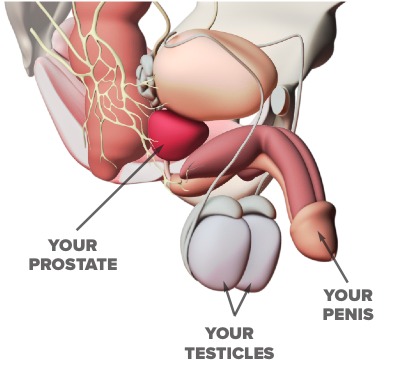
Now examine your epididymis, the comma-shaped cord behind each testicle, which sometimes gets confused for an abnormal lump. By regularly performing this exam, you will become more familiar with your testicles and aware of any changes that might be of concern.
If you find something suspicious CLICK HERE
This Testicular Self-check is not a substitute for seeing your doctor yearly. To be effective, testicular cancer early detection must combine 1) Monthly Testicular checks and 2) Regular Clinical Exams.
You can set up a free monthly health reminder on the Self chec Web site. Remember, it could help save your life.
Start the conversation about Testicular Cancer