How you can help prevent
SKIN CANCER
Your Self chec Keeping Healthy Guide
The cure rate for skin cancer could be 100 percent if all skin cancers were brought to a doctor’s attention early enough.
You are your skin’s best friend. Checking it monthly makes you more familiar with what “normal” looks like, allowing you to notice any changes that may take place. Remember, changes on your skin are not sure signs of cancer; however, it is important to see a doctor if a mark changes or something doesn’t look right to you.
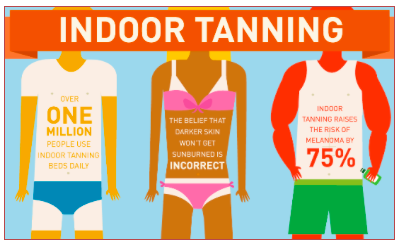
Quick tip: Eliminate prolonged exposure to the sun and examine your body regularly for any new growths or changes on your skin. Don’t use tanning beds, they can be deadly.
View the video below and/or print the Self chec How-to-Guide. Become more proactive and empower yourself towards a healthier life.
We are grateful to Videojug.com for permitting Self chec to share this very important video with you.
Your Skin VIDEO how-to-guide
Your PRINT how-to-guide
For a thorough self-check you’ll need both a full-length and a hand-held mirror. You’ll also need to be in a room with very good lighting. It is probably best to do this before or after a shower or bath.

1) Look in the mirror, check your face (including your eyelids and inside of mouth).
2) While parting your hair with your fingers, hairdryer or hair brush, look into the full-length mirror and use the hand mirror to check your scalp.
3) Continue by checking front and back of the following areas (note: with back to mirror, use hand mirror to inspect the back of these areas) ears, neck and shoulders, upper arms, underarms, elbows, lower arms, chest, genitals, upper legs and back. MEN: the back is the most common site of melanomas in males — you may need someone to help you here. WOMEN: don’t forget to check under your breasts.
4) Sitting down, check your hands, including under your nails, lower legs and feet, including soles, heels, between toes and toenails. Continue to use both mirrors to check all areas of your buttocks and genitals.

If you find something suspicious CLICK HERE
This Skin self-check is not a substitute for seeing your doctor yearly. To be effective, skin cancer early detection must combine 1) Monthly Skin checks and 2) Regular Clinical Exams.
© 2005 All illustrations, Fairman Studios, LLC. All rights reserved
Illustrations may not be reproduced in any form without the express consent of
Fairman Studios, LLC and Self chec, Inc.
Join the conversation about Skin Cancer


August 27th, 2010 at 3:08 pm
IN 1999, I HAD TWO SUCCESSFUL SURGERIES FOR MELANOMA.
The suspicious birthmarks were discovered by my dermatologist during my regular skin checks. Because I have irregular birthmarks and have had severe sunburns, as a child, I schedule routine skin examinations during the year to catch skin cancer and melanoma early. My dermatologist and naturopath recommended that I strengthen my immune system by eating healthier, taking supplements, cutting down on stress and avoiding toxins, along with checking my own skin regularly, wearing sun protective clothing and sun block and avoiding the sun during peak hours. It’s working. I haven’t had a suspicious lesion in eighteen months.