
- info@selfchec.org
Powered by Google  Translate
TranslateTesticular Cancer

Risk Factors

Below are the testicular cancer risk factors that may increase your chances of being diagnosed:
- Family history. If family members have had testicular cancer, you may have an increased risk.
- Age. Testicular cancer affects teens and younger men, particularly those between ages 15 and 35. However, it can occur at any age.
- Race. Testicular cancer is more common in white men than in black men.
- An undescended testicle.
Age Guidelines
It may be uncomfortable at first to do your testicular self-check and to talk to your health professional about your “private parts”, but it’s really necessary. Follow the Testicular cancer age guidelines below about when you need to start your checks.
Beginning at ages 15-18,
Do your monthly testicular self-check. If you have a family history of Testicular cancer, ask your health professional about starting your monthly self-checks and doc-checks even earlier.
Regular monthly self-checks help you become more familiar with how your testicles feel when they are normal. This will allow you to notice any changes that may take place and be of concern
Get your yearly doc-check.
During this exam make sure your health professional checks your testicles.

How To Do Your Testicular Cancer Self-check
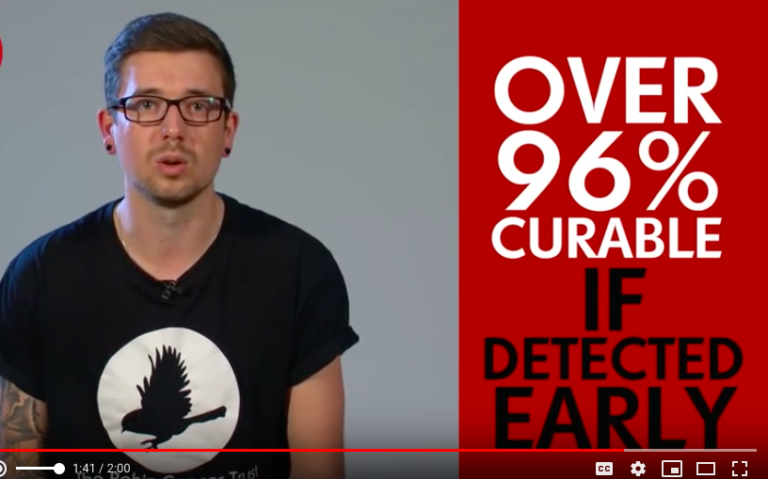
Your Video Testicular Cancer Self-check
The best time to check your testicles is after a warm shower or bath. The heat from the water causes the skin of your scrotum to relax, making it easier to check.
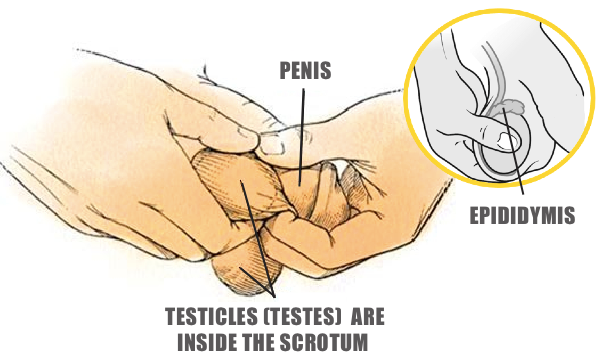
- Examine each testicle with both hands. (See below) Place your index and middle fingers under the testicle while placing your thumbs on top.
- Applying slight pressure, gently roll the testicle between your thumbs and fingers looking for any irregularities like small, painless lumps. The testicles are usually smooth, oval shaped and somewhat firm; it’s okay for one testicle to be slightly larger than the other.
- Now examine your epididymis, the comma-shaped cord behind each testicle, which sometimes gets confused for an abnormal lump.
Signs And Symptoms
What To Look For When Checking Your Testicles
Following is a list of what to look for when checking your testicles. If you have any of these testicular cancer signs or symptoms, err on the side of caution and call your health professional for a doc-check
- A feeling of heaviness in the scrotum (pouch of skin containing the testicles).
- A lump or swelling in either testicle.
- A dull ache in the abdomen or groin.
- A sudden collection of fluid in the scrotum.
- Pain or discomfort in a testicle or the scrotum.

Reduce Your Chances Of Getting Testicular Cancer

Most of the risk factors for testicular cancer, like age, race and conditions occurring at or before birth, are out of a person’s control. However, there are some things a person can do to reduce risks of testicular cancer:
- Know your family history and discuss any concerns with your health professional.
- Know workplace health and safety rules and follow them.
- Be aware of the symptoms of testicular cancer. Although testicular cancer can usually be cured at any stage, finding it early may make it easier to treat.
- Discuss the risks and benefits of medical imaging with your health professional such as CT scans to avoid unnecessary exposure to ionizing radiation. This is particularly important for children.
It’s also important to:
Resource: Mayo Clinic, ACOR, Cancer.net, Health.NY.Gov
Frequently Asked Questions
.gif)
Talking about your testicles and getting them checked out is important because testicular cancer is highly curable when caught early and can kill you if left untreated. We don’t want you dying of embarrassment. The Frequently Asked Questions below will help answer any questions you may have about testicular cancer prevention and early detection
There are some things that may increase your risk of testicular cancer. Check our “heads-up” list so you can see what they are… Read more
You’d be surprised how young a diagnosis of testicular cancer can be… Read more
Watch someone like you do his testicular self-check and learn how. Read more
Lumps, bumps the size of chestnuts or golf balls? It’s time to find out which ones should be checked out. Read more
This page will help empower you to take the proactive steps to keep you and your testicles healthy. Read more
What Self Chec Is Saying To You
If you've been too busy, overwhelmed, exhausted or simply convinced that you can get to it later, you need to know that "later" is the most dangerous word in healthcare.

Not Someday, Not Later, Now.
Sign Up To Be Reminded
.png)